
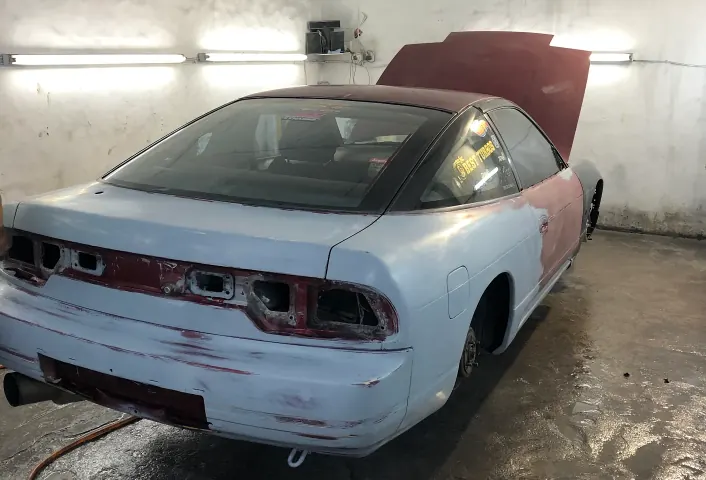
Start with the whole area
Take a few steps back and photograph the damaged side or corner of the car. Include the neighbouring panels, wheel and bumper where relevant. This gives the workshop context that a close-up alone cannot provide.
- Keep the car and camera still.
- Use daylight where possible and avoid harsh reflections.
- Take photos only when the vehicle is parked safely.
Then show the detail
Take a close-up of each dent, scratch or crack. Add a second photo from a shallow angle to help show a crease or change in shape. Photograph every affected area, even when the damage appears minor.
- Keep the damaged area in focus.
- Avoid filters or editing that changes the appearance of the paint.
- For a scratch, show both its length and the surrounding surface.
Include the details a photo cannot show
Add your vehicle registration, make and model, and a brief description of what happened. Mention any difficulty opening a door, a loose component or a warning message since the impact. Let the workshop know if previous repairs have been made in the same area.
Understand what an initial estimate means
Photos are a useful starting point, but they do not reveal everything. Damage behind a bumper, a panel's mounting points or the condition of underlying material may only become clear during inspection. The workshop may ask to see the vehicle before confirming a price.
Use our quote form to attach your photos and vehicle details. You can also send them directly to the workshop on WhatsApp.